


Automate without disruption: How phased straddle carrier automation protects your operations
Key takeaways
- Individual autonomous machines lack the real-time, holistic view of the entire terminal needed to make efficient routing and scheduling decisions — making traffic conflicts and bottlenecks inevitable without centralised coordination.
- A centralised automation system acts as the conductor of the operation, coordinating every machine, route and task in real time to keep the whole fleet running in seamless harmony.
- Advanced onboard AI has its place in improving driving performance and safety, but operational efficiency at terminal scale requires decision-making to be centralised — not distributed across individual machines.
For terminal operators running a manual straddle carrier fleet, automation often raises a practical question before any discussion turns to technology: what happens to the terminal while it's being automated?
It's a valid concern as many automation concepts require extensive civil work before the first automated machine can begin operating. Automated stacking crane terminals, for example, often involve significant ground preparation and infrastructure changes, forcing parts of the terminal to shut down. For operators working to fixed vessel schedules, prolonged downtime can mean lost revenue and strained customer relationships.
So the question isn't simply whether it would be nice to automate or not. It's whether you can modernise your terminal without disrupting the business that keeps it running today.
The implementation strategy matters as much as the technology
When evaluating automation concepts, it's easy to focus on the technology itself. But one of the biggest factors influencing project cost, risk and return on investment is how the transition is carried out.
If the entire or a large part of the terminal must be converted before operations can resume, operators face an extended period of reduced productivity and delayed returns. A phased implementation follows a different approach. Instead of transforming the whole yard at once, automation is introduced one area at a time while the remainder of the terminal continues operating.
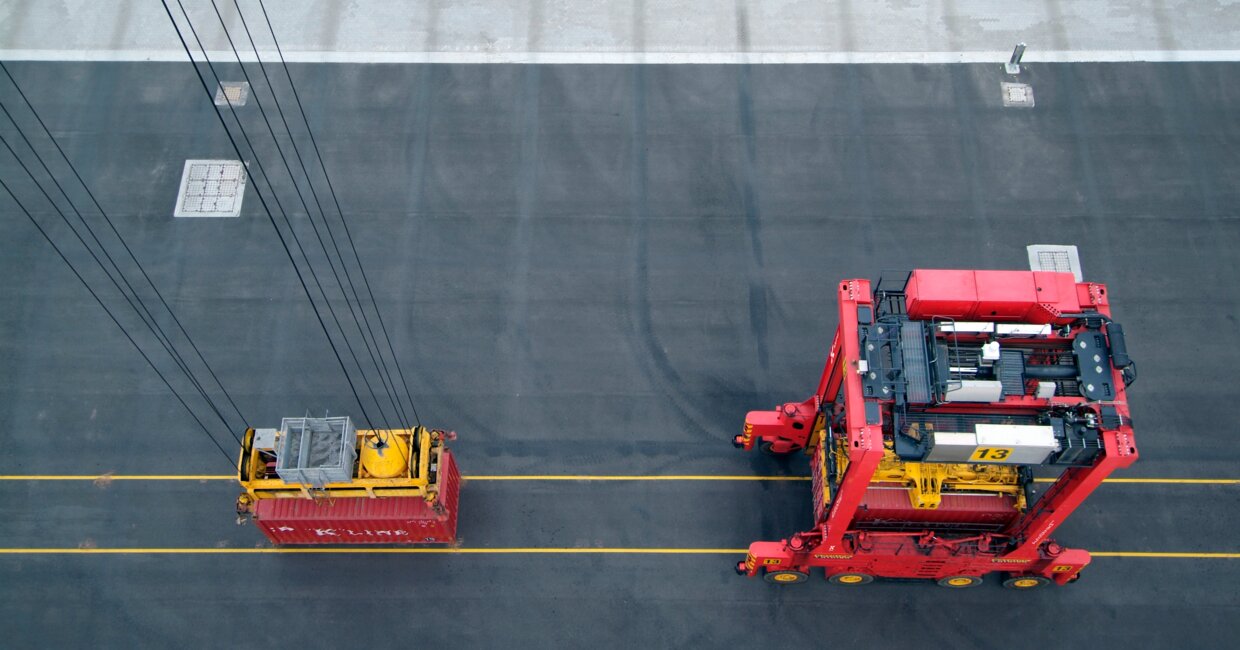
This allows terminals to maintain throughput, continue serving customers and generate revenue throughout the project, rather than waiting until the entire automation programme is complete before seeing the benefits. Automating operations with Kalmar AutoStrad™ has been designed around this principle. Individual sections of the yard can be commissioned progressively, allowing automation to be introduced alongside ongoing operations.
Does automation always require rebuilding the terminal?
Automation is often associated with major civil works, but that isn't true for every automation concept. The level of infrastructure change depends largely on how closely the automated operating model matches the existing terminal.
Because automated straddle carriers follow the same fundamental operating concept as manual fleets, much of the existing infrastructure can typically remain in place. Reefer racks usually stay where they are, existing pavement can often be retained if it's in suitable condition, and light poles and other fixed infrastructure rarely need modification. The main physical change is relocating maintenance facilities and other regularly occupied areas to the perimeter of the automated operating zone to meet safety requirements.
Investment is instead focused on the automation systems themselves: communications networks, Terminal Operating System (TOS) integration, safety infrastructure, and instrumentation upgrades for quay cranes and, where applicable, rail-mounted gantry cranes. While essential, these upgrades are generally far less extensive than rebuilding the yard itself.
Fast deployment with zero operational shutdowns
When evaluating conversion timelines, traditional gantry crane or ASC projects often require two to five years of preparation and civil work before operations can begin. In contrast, an AutoStrad transition typically moves from initial order to live commercial operation in just 12 to 18 months. Much of this speed is driven by off-site preparation and digital testing. Equipment arrives at the terminal fully erected and factory-tested, while TOS integrations, interface logic, and operational exception scenarios are validated beforehand using a digital twin emulation platform. This minimizes the physical footprint required for on-site commissioning and eliminates unexpected troubleshooting at go-live.
As the AutoStrad operating model reuses existing pavement, reefer structures, and yard layouts, necessary civil engineering works are minimal. As a result, most civil works—such as installing safety fencing, I/O cabinets, and wireless network infrastructure—can be carried out in parallel while conventional manual operations continue running in the area. Once civil works in a designated section are complete and the yard area is cleared, the handover from manual to automated operation happens almost instantly. Taking over a yard block for automated operations typically takes as short as half a day per block. This rapid, block-by-block handover ensures that lost yard capacity is kept to an absolute minimum, allowing terminals to systematically expand their automated footprint while keeping daily vessel and landside operations moving.
Looking beyond the technology
When evaluating automation, machine performance is only part of the equation. Equally important is understanding how the transition will be carried out. How much of the existing infrastructure can be retained? Can operations continue throughout implementation? How quickly will the investment begin generating value?
The answers to these questions often determine the success of an automation project just as much as the technology itself. By enabling phased implementation, reusing much of the existing terminal infrastructure and increasing capacity within the existing footprint, Kalmar AutoStrad™ offers terminals a practical path to automation while keeping the business moving throughout the transition.
Related articles
Further reading
Subscribe and receive updates in your email
Abonner på våre utgivelser